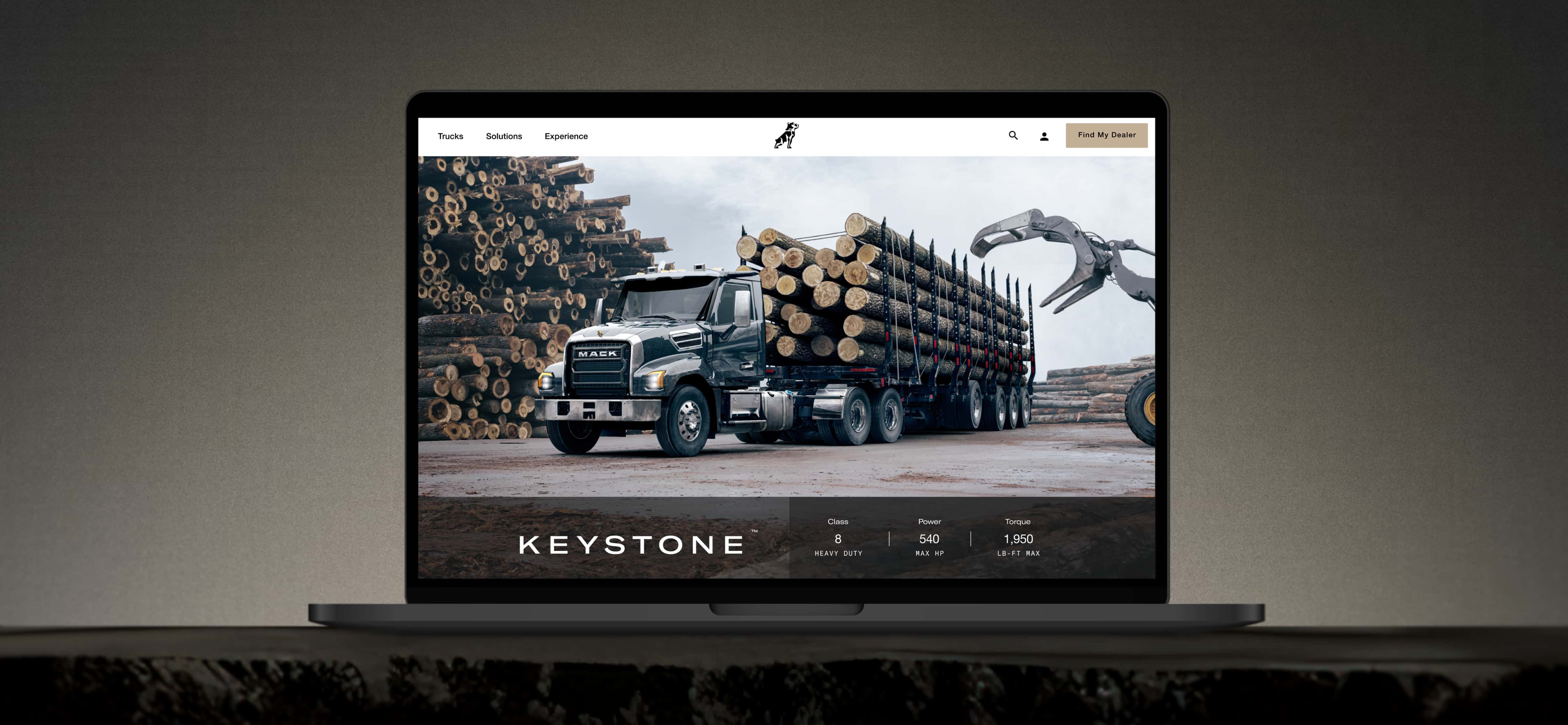
At the eTail AI Summit in late February 2026, Paul Acito, Founder of Lyftbridge Innovation, said something during his session “Agentic Commerce: How AI Agents Are Redefining the Online Buying Journey” that reframed the challenge for everyone in the room: “We are headed toward a dual web. One for the agents and one for humans. Your website needs to be designed for both.”
It’s a deceptively simple statement. But unpacked, it describes a structural shift in how buying journeys work—one that applies whether you’re selling industrial equipment or consumer goods. And one that most brands are not yet prepared for.
Understanding the Dual Web
For decades, websites have been built with one audience in mind: human visitors. And if you’ve been practicing SEO, you’ve also been optimizing for search engine crawlers. Visual hierarchy, emotional resonance, conversion-optimized layouts for the humans, and clean HTML, structured data, keyword-optimized content for the search engine bots.
That’s still important. But there’s a third audience that has entered the journey: AI agents. These agents are researching, filtering, summarizing, and recommending before a human ever lands on your website. And they don’t experience your website the way a person does.
LLMs can’t navigate JavaScript and images only get in the way. Unlike human visitors, agents work from raw, static HTML, clean text, and structured data. If your content isn’t structured for them to parse, you’re invisible to a growing portion of the buyer journey.
The Agentic Phase of the Journey Happens Upstream
Here’s what makes this shift significant: the agent phase of the buying journey now happens before the human phase. Buyers—whether they’re procurement managers evaluating vendors or consumers narrowing a consideration set—are increasingly relying on AI tools to do preliminary research, compare options, and surface recommendations.
By the time a human lands on your site, a shortlist may already exist. And if your brand hasn't surfaced during the agent phase, you may not be on it.
This is true in B2B contexts where AI-assisted research is reshaping vendor discovery, RFP shortlisting, and procurement decisions—and in DTC contexts where shoppers use AI tools to narrow categories, compare products, and build purchase confidence before arriving at a brand’s site.
The real question is: how do you take your assets (your product specs, your case studies, your differentiators) and make them available to LLMs so they can act as your sales agents?
But, Even Human Buyers Have Changed
The dual web isn’t just an agent problem. Even when a real person lands on your site, the nature of their visit has shifted.
Consider this: the number-one use case for LLMs right now is therapy—a signal of just how much people trust these tools with consequential decisions. That same trust is reshaping how buyers research and evaluate purchases. People are increasingly arriving with pre-formed opinions, summarized comparisons, and AI-generated answers already in hand. They’re not coming to be convinced, they’re coming to confirm or to resolve a lingering doubt.
In high-consideration categories (complex B2B purchases, big-ticket consumer goods, or anything with significant financial or operational stakes) the job of your digital experience has changed. Optimizing for conversion assumes the buyer is ready. Your site now needs to build the confidence that gets them there.
That means the human web and the agent web serve different but complementary functions. The agent web gets you into consideration; the human web closes it.
The Window to Differentiate is Open—But Not for Long
This is the early-mover window. The brands that structure their content and storefronts for AI agents now will be the ones consistently surfaced when buyers—or agents acting on their behalf—go searching. Once AI models learn to cite a brand as a trusted source for a given category, that becomes a default answer.
Answer Engine Optimization (AEO) and Generative Engine Optimization (GEO) are the emerging disciplines that address this. We’ve covered both in depth: see Why Your Site Isn’t Showing Up in AI Search Results and The Evolution of Search: Essential Optimization Strategies for AI-Powered Discovery. But the short version is this: your SEO foundation isn’t wasted; it’s the starting point. What’s new is the urgency and precision required to build on it for the agent web.
What to Do About It
The good news is that getting agentic-ready doesn’t mean starting over. It means being deliberate about a few specific things.
- Audit your site for agentic readiness. Strip away the JavaScript and image-heavy layouts and what’s left? Can an LLM parse your product pages, category content, and key differentiators? This is the baseline assessment.
- Structure your content for machines. Clean text, schema markup, structured data, clear product attributes, accessible FAQs and specs. If your most important content is buried in PDFs or locked in image-heavy brochures, AI can’t see it.
- Think AEO alongside SEO. Content that answers questions directly and authoritatively is more likely to be surfaced by AI-generated summaries. The format matters as much as the content.
- Don’t abandon the human experience. The goal is to appeal to both. Remember: the agent web gets you into consideration; the human web closes. A site optimized only for agents will be structurally sound but experientially flat. You need both layers working.
- Start experimenting with agent-ready formats. The infrastructure for this is already being built at the platform level. Shopify launched Agentic Storefronts in December 2025, allowing merchants to manage how their products appear across AI shopping platforms like Google AI Mode, Microsoft Copilot, and ChatGPT, with attribution tracking for AI-originated orders. It’s an early signal of where commerce is headed, and worth understanding now even if full adoption is still in progress.
Two audiences. Two optimization challenges. One website that needs to serve both. An impressive site means nothing if it can't be read by the agents filtering it or trusted by the humans deciding whether to act on it.
Is your website built for both? If you’re not sure where to start, we can help you assess where you stand and build a strategy that addresses both audiences. Let’s talk.